Patterns of Age Influence on Payment Method Selection Across Licensed Online Gambling Environments
Written by Sofia Braun · Aug 25, 2026
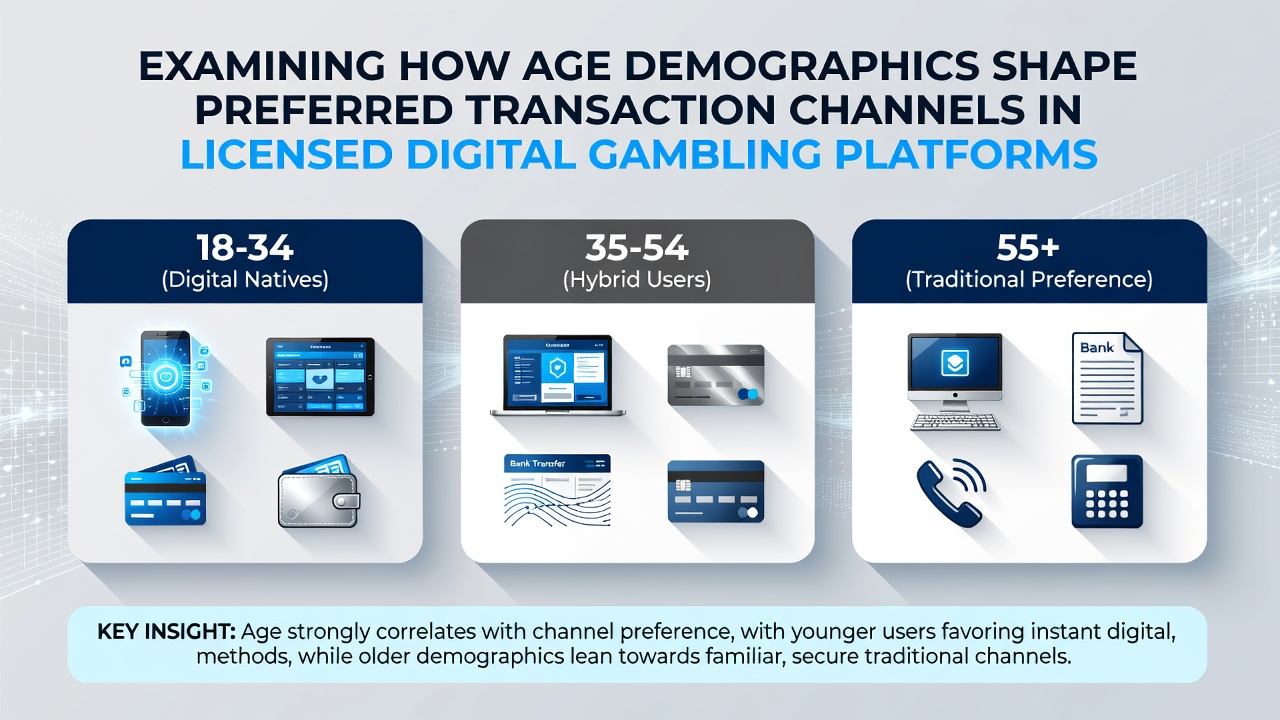
Patterns of Age Influence on Payment Method Selection Across Licensed Online Gambling Environments
Research from multiple regulatory bodies shows that age demographics directly correlate with choices in transaction channels at licensed digital gambling platforms, where younger users gravitate toward mobile-integrated options while older groups maintain preferences for established banking routes, and data released in August 2026 from the New Jersey Division of Gaming Enforcement highlights these divides through aggregated user activity logs across state-regulated sites.
Younger Users and Digital-First Channels
Observers note that individuals aged 18 to 34 consistently select e-wallets and cryptocurrency transfers at higher rates than other cohorts, since these methods integrate seamlessly with smartphone apps and reduce processing delays, while figures from the Canadian Gaming Association reveal that 68 percent of platform users in this bracket completed deposits via services like PayPal or Skrill during the first half of 2026.
Platform operators report that this age segment also experiments with emerging options such as instant bank transfers through open banking protocols, because familiarity with technology lowers barriers to adoption, and studies conducted by the University of Nevada Reno found similar patterns in Nevada-licensed environments where verification steps for crypto wallets averaged under two minutes for younger account holders.
Middle-Aged Preferences for Balanced Options
Those between 35 and 54 years old demonstrate mixed usage patterns that combine credit card transactions with occasional e-wallet shifts, since this group often balances convenience against established security perceptions, and reports issued by the Australian Communications and Media Authority indicate credit cards accounted for 52 percent of all deposits among this demographic in licensed Australian platforms throughout 2025 into 2026.
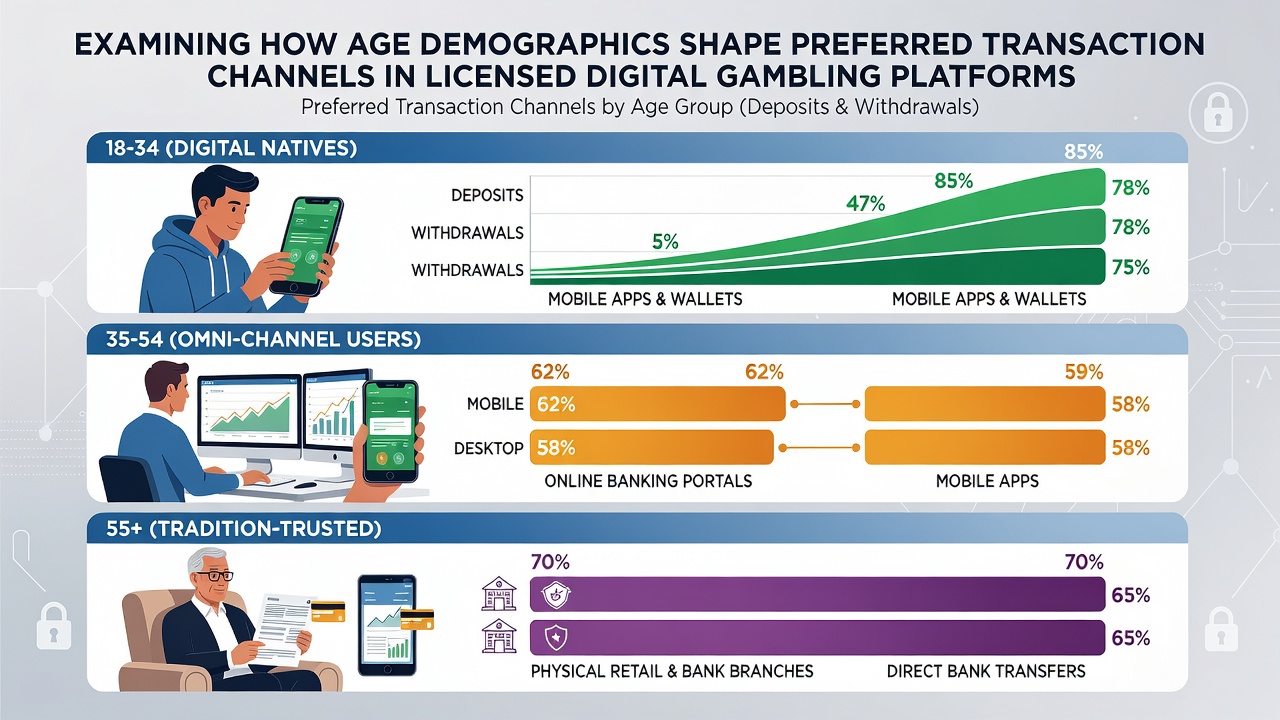
Analysts observe that middle-aged users frequently maintain multiple saved payment profiles within single accounts, allowing quick switches between channels based on promotion availability or withdrawal speed requirements, whereas bank wire transfers still appear in roughly 19 percent of their activity logs according to the same Australian data sets.
Older Demographics and Traditional Methods
Users aged 55 and above show stronger reliance on direct bank transfers and credit card processing through traditional gateways, because concerns over digital wallet security persist across surveys, and evidence compiled by the Nevada Gaming Control Board documents that 61 percent of transactions from this cohort in 2026 involved standard card or ACH pulls rather than app-based alternatives.
Regulators note slower adoption rates for cryptocurrency among older players, with verification processes taking longer due to additional identity checks, while platform analytics indicate these users prioritize channels that offer paper trail confirmations sent via email or physical mail.
Cross-Generational Factors in Channel Selection
Transaction success rates vary by age when verification layers increase, since younger users navigate biometric logins with greater ease compared to older groups that encounter friction with multi-factor prompts, and data aggregated across European platforms licensed under the Malta Gaming Authority points to a 14 percent higher completion rate for e-wallet deposits among users under 30 versus those over 60.
Seasonal spikes appear during major sporting events where all demographics increase activity, yet the underlying channel preferences remain stable, with researchers at the University of Melbourne confirming through longitudinal tracking that age-based patterns hold even as overall volume rises.
Conclusion
Evidence from regulatory reports and academic tracking demonstrates clear age-driven segmentation in transaction channel usage within licensed digital gambling platforms, where platform design and compliance protocols increasingly accommodate these differences to maintain user engagement across all groups.