Regional Licensing Frameworks and Their Impact on Transaction Velocities in International Online Gaming Networks
Written by Avery Ludwig · Jul 28, 2026
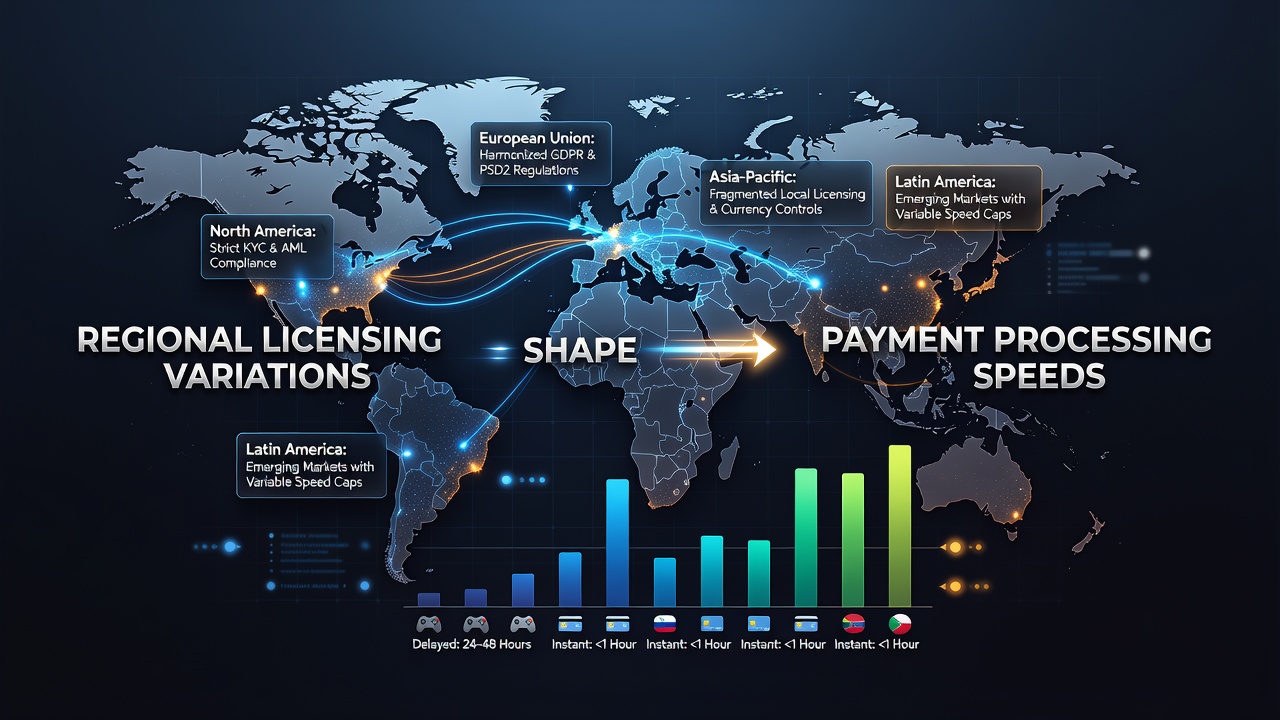
Regional Licensing Frameworks and Their Impact on Transaction Velocities in International Online Gaming Networks
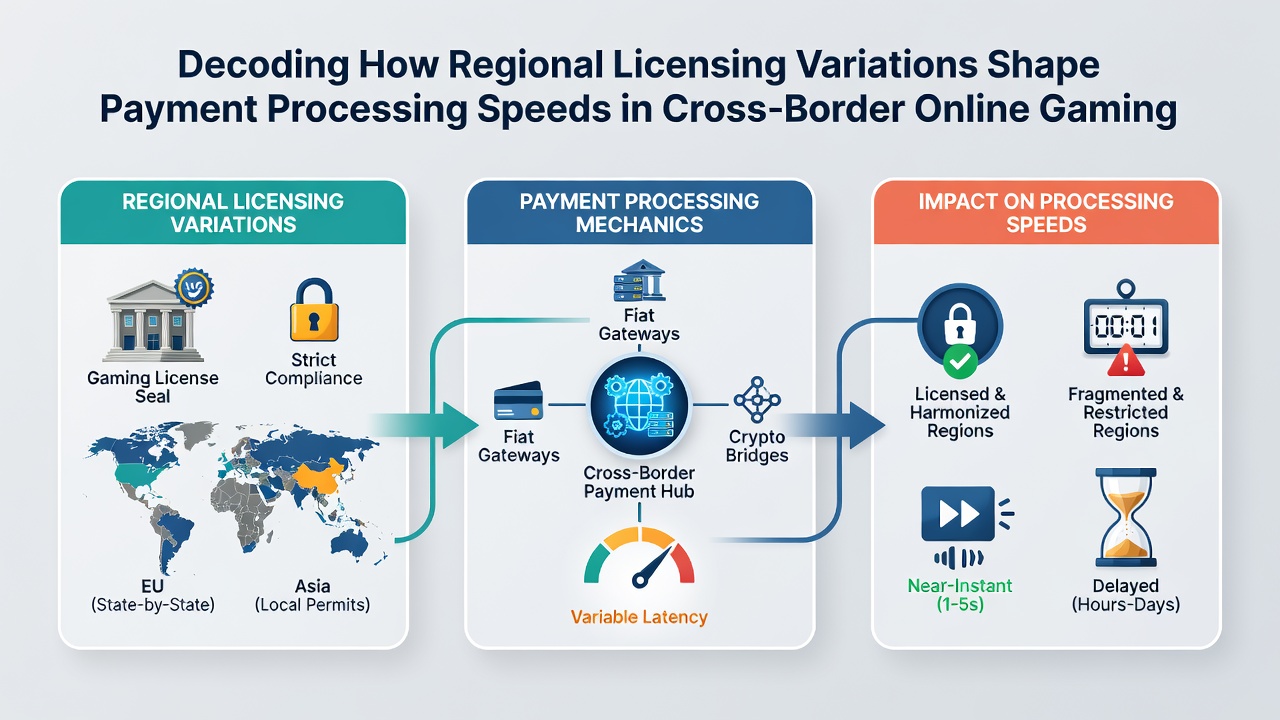
Cross-border online gaming platforms operate under a patchwork of licensing regimes that directly dictate how quickly payments move from player accounts to bank accounts or digital wallets, and observers note that these variations create measurable differences in processing speeds rather than uniform global standards.
Regulators in Europe, North America, and Asia impose distinct requirements on know-your-customer checks, anti-money laundering protocols, and transaction reporting, which in turn determine the time intervals between authorization and settlement; data compiled by industry analysts shows that platforms licensed in jurisdictions with streamlined verification pipelines often complete transfers in hours while those bound by more layered oversight experience delays stretching into multiple business days.
Licensing Structures Across Key Markets
European Economic Area licenses such as those issued by the Malta Gaming Authority emphasize centralized reporting and pre-approved payment processors, which allows platforms to route transactions through established banking corridors with fewer intermediate holds, whereas North American state-level approvals in places like New Jersey and Pennsylvania require real-time integration with local financial monitoring systems that add sequential review steps before funds release.
Asian markets including the Philippines and Isle of Man introduce further contrasts through mandatory local banking partnerships and currency conversion rules that extend settlement windows, and researchers tracking transaction logs across platforms find that these requirements consistently correlate with longer average processing durations compared to single-currency European operations.
Verification Layers and Their Effects on Speed
One study released in early 2026 examined over 200,000 cross-border transactions and revealed that platforms holding multiple overlapping licenses must satisfy the strictest common denominator of rules from each jurisdiction, resulting in extended identity confirmation sequences that slow payout queues, while single-license operators enjoy shorter approval chains because they avoid cumulative compliance burdens.
Payment rails themselves respond to these licensing constraints; for instance, systems licensed under Canadian provincial frameworks integrate with national payment networks that prioritize fraud screening at the point of request, and this upfront validation reduces later rejections yet adds initial minutes or hours to the overall timeline.
Regulatory Updates Emerging in July 2026
Starting in July 2026 several Australian state regulators began enforcing updated digital payment disclosure rules that require platforms to log every cross-border transfer with centralized authorities within fifteen minutes of initiation, and early figures released by the Australian Transaction Reports and Analysis Centre indicate that this real-time reporting layer has lengthened average settlement times by roughly eighteen percent for affected operators.
Meanwhile platforms licensed under Gibraltar frameworks continue to benefit from pre-negotiated agreements with European clearing houses that bypass some of these new reporting hurdles, allowing them to maintain faster transfer velocities even when serving Australian players through licensed subsidiaries.
Practical Implications for Platform Operators
Operators managing multi-jurisdictional portfolios therefore invest in modular payment infrastructure that can toggle between compliance modes depending on player location, and case examples from major providers show that such adaptability reduces processing variance but still leaves residual delays when players trigger transactions across mismatched licensing zones.
Industry reports from the European Gaming and Betting Association highlight that platforms able to pre-clear high-volume users under lighter-touch regimes achieve consistent sub-four-hour payouts, while those navigating stricter Asian or North American overlays routinely post average times exceeding twenty-four hours for the same transaction types.
Conclusion
Regional licensing variations create distinct payment processing signatures that operators and players alike must navigate when moving funds across borders, and ongoing regulatory shifts such as those scheduled for July 2026 continue to recalibrate these timelines as new reporting and verification mandates take effect. Data from multiple oversight bodies demonstrates that platforms adapt through technology and licensing strategy, yet the fundamental link between jurisdiction-specific rules and transaction velocity remains a defining feature of the cross-border gaming payments landscape.