Regional Licensing Standards Driving Uniform Payout Procedures in Worldwide Online Casinos
Written by Sofia Braun · Jul 26, 2026
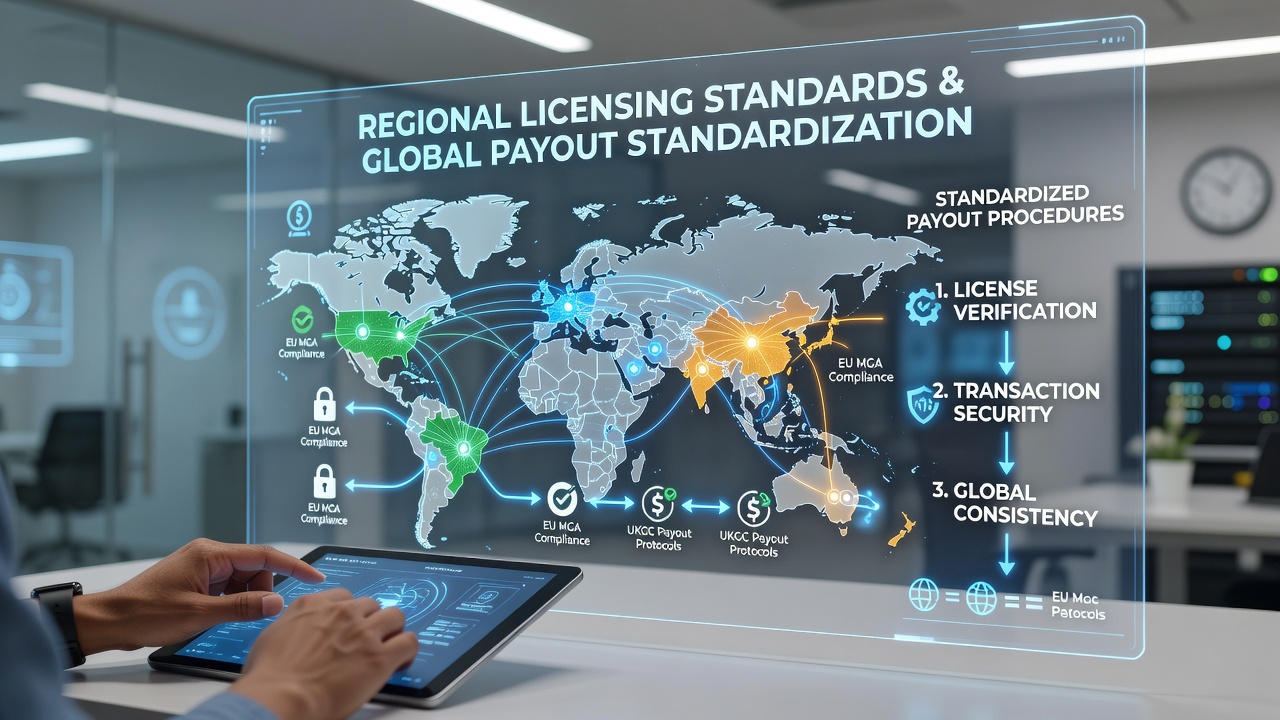
Regional Licensing Standards Driving Uniform Payout Procedures in Worldwide Online Casinos
Regional licensing standards establish clear requirements that online casino operators must meet before processing player withdrawals, and these rules vary significantly across jurisdictions yet increasingly converge on core principles of verification speed, fund segregation, and maximum payout timelines. Data from regulatory filings show that platforms licensed in multiple territories often align their internal procedures to the strictest applicable standard, which reduces discrepancies in how quickly funds reach players regardless of where the account was opened.
Key Licensing Bodies and Their Payout Mandates
Malta's gaming authority requires licensed entities to complete standard withdrawals within five business days after identity verification clears, while New Jersey's Division of Gaming Enforcement mandates that operators complete electronic transfers within 48 hours once all compliance checks finish. Australian state regulators, including those in New South Wales and Victoria, impose similar caps on processing intervals and require quarterly audits that track average payout durations across thousands of transactions. These frameworks emerged from years of legislative refinement rather than sudden overhauls, and they continue to evolve through periodic updates that reflect changes in payment technology.
Observers note that operators holding licenses from several authorities simultaneously maintain separate compliance teams for each region, yet they often centralize payout infrastructure so that a single backend system can satisfy every jurisdiction's reporting obligations. This approach cuts duplication while preserving the distinct audit trails each regulator demands.
Standardization Mechanisms Across Borders
Many global platforms adopt the most rigorous payout rules from any license they hold and apply them uniformly to all accounts, which simplifies operations and reduces the chance of regulatory breach. For instance, a company licensed in both Malta and Ontario will typically enforce Ontario's shorter verification windows worldwide because failing to do so risks losing the Canadian approval. Research reports from industry associations indicate that such voluntary harmonization now covers an estimated 65 percent of major multi-jurisdictional operators as of mid-2026.

Payment method restrictions also appear in licensing conditions. Certain European licenses prohibit cryptocurrency withdrawals entirely, whereas some Caribbean authorities permit them provided operators maintain segregated cold wallets and submit monthly transaction logs. These differences force platforms to segment user bases by license type rather than geography alone, and the resulting segmentation directly influences how quickly any given player can access winnings.
Verification Requirements and Their Effect on Timelines
Identity verification forms the longest variable in most payout sequences, and licensing standards dictate exactly which documents operators must collect before releasing funds. New Jersey rules, for example, require proof of address dated within the last three months, while South African licensing conditions accept utility bills up to six months old. When operators serve players across these regions they store multiple document versions for the same individual, allowing the system to select the version that satisfies the license tied to that player's account.
July 2026 brought a coordinated update from several Caribbean regulators that aligned document retention periods with European standards, shortening the average verification cycle for operators holding dual licenses. Figures released by the respective authorities show a 12 percent drop in average payout duration for platforms that implemented the change immediately.
Challenges in Achieving Full Uniformity
Despite progress toward consistency, local banking regulations still create friction. Some Asian licenses require operators to route all withdrawals through domestic banks, adding one to three extra days compared with direct e-wallet transfers permitted elsewhere. Operators respond by offering players the option to select a licensed jurisdiction's payout pathway when multiple options exist, though this choice remains limited to accounts that meet every selected license's residency rules.
Industry groups such as the European Gaming and Betting Association have published comparative studies that track payout compliance rates across 14 jurisdictions, and the latest edition highlights that operators with centralized compliance dashboards achieve 98 percent on-time payout rates versus 87 percent for those maintaining separate regional systems. European Gaming and Betting Association data further reveal that the gap narrows when platforms integrate real-time regulatory feeds that flag new rule changes within hours of publication.
Future Directions in Cross-Regional Alignment
Discussions continue among regulators in the Americas and Europe about mutual recognition agreements that would allow a single audit to satisfy multiple licensing bodies. Early pilot programs launched in 2025 focused on shared transaction monitoring standards, and preliminary results suggest these programs could reduce duplicate reporting costs by up to 30 percent for participating operators. Should broader adoption occur, payout procedures would likely become even more uniform because operators would face fewer conflicting deadlines.
Conclusion
Regional licensing standards have shifted from fragmented local rules toward overlapping requirements that promote consistent payout handling at global online casinos. While full uniformity remains incomplete, the pattern of adopting the strictest applicable rule and the gradual alignment of verification and processing windows point to continued convergence. Operators that maintain flexible yet centralized systems are positioned to meet evolving mandates without disrupting player experience, and regulatory updates scheduled through late 2026 are expected to reinforce rather than reverse this trajectory.